A fisherman's helper
Labradors began in Newfoundland, hauling nets and fetching fish that slipped the hook from icy water.
Big dogs · A lot of time and space
Gundog · from Newfoundland, Canada
A sturdy, short-coated dog with a broad head, soft drop ears and a thick tail like an otter's. Black, yellow or chocolate.
Trots after you, tail going. Move your pointer and see.
Good to know
Labradors began in Newfoundland, hauling nets and fetching fish that slipped the hook from icy water.
The coat has two layers: a soft, warm one underneath and a short, oily one on top that sheds water.
The thick, tapering tail works as a rudder when the dog swims.
Many Labradors carry a change in a gene that stops them ever feeling full. It is easy to overfeed one.
They were bred to carry game without marking it. A well-taught Labrador can carry an egg without breaking it.
Most guide dogs are Labradors or Labrador crosses, picked for their steady temper and wish to please.
The real thing
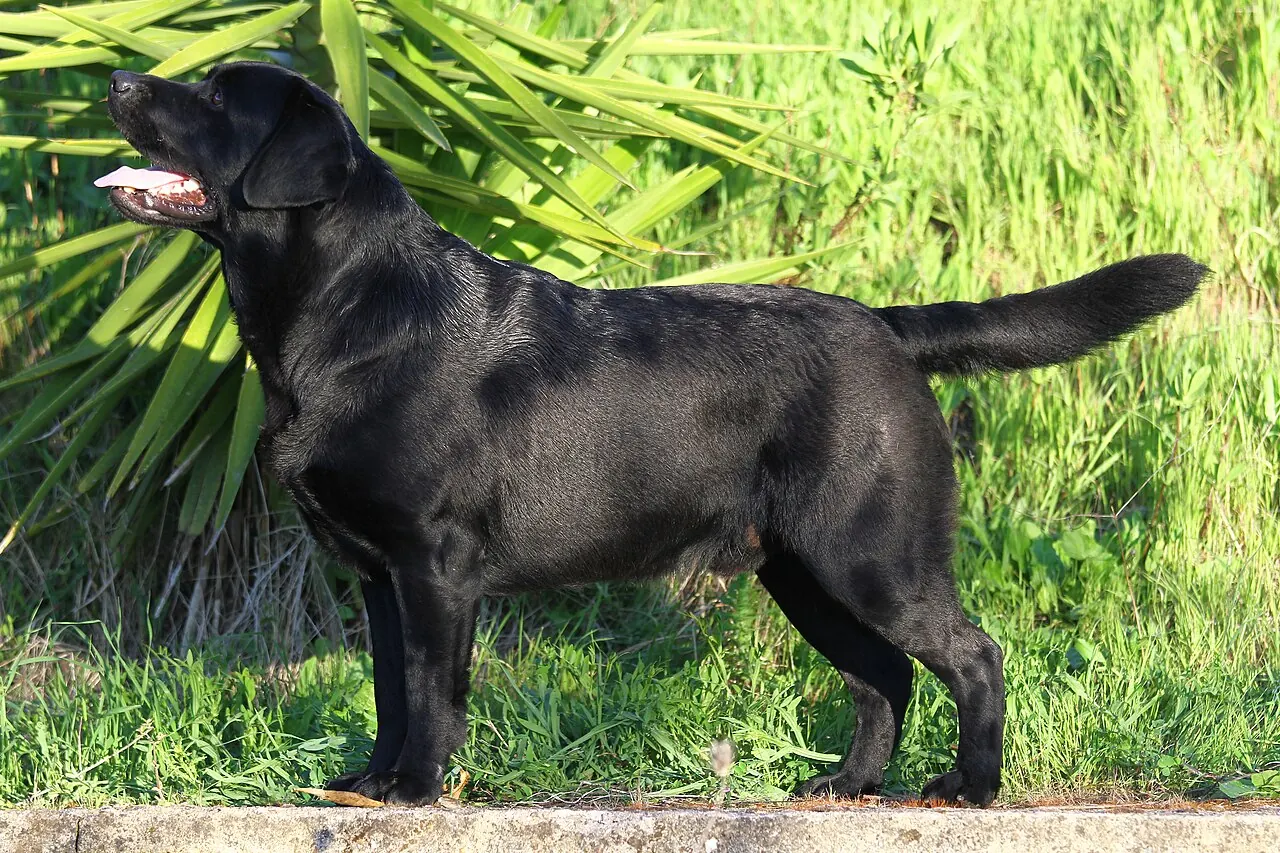
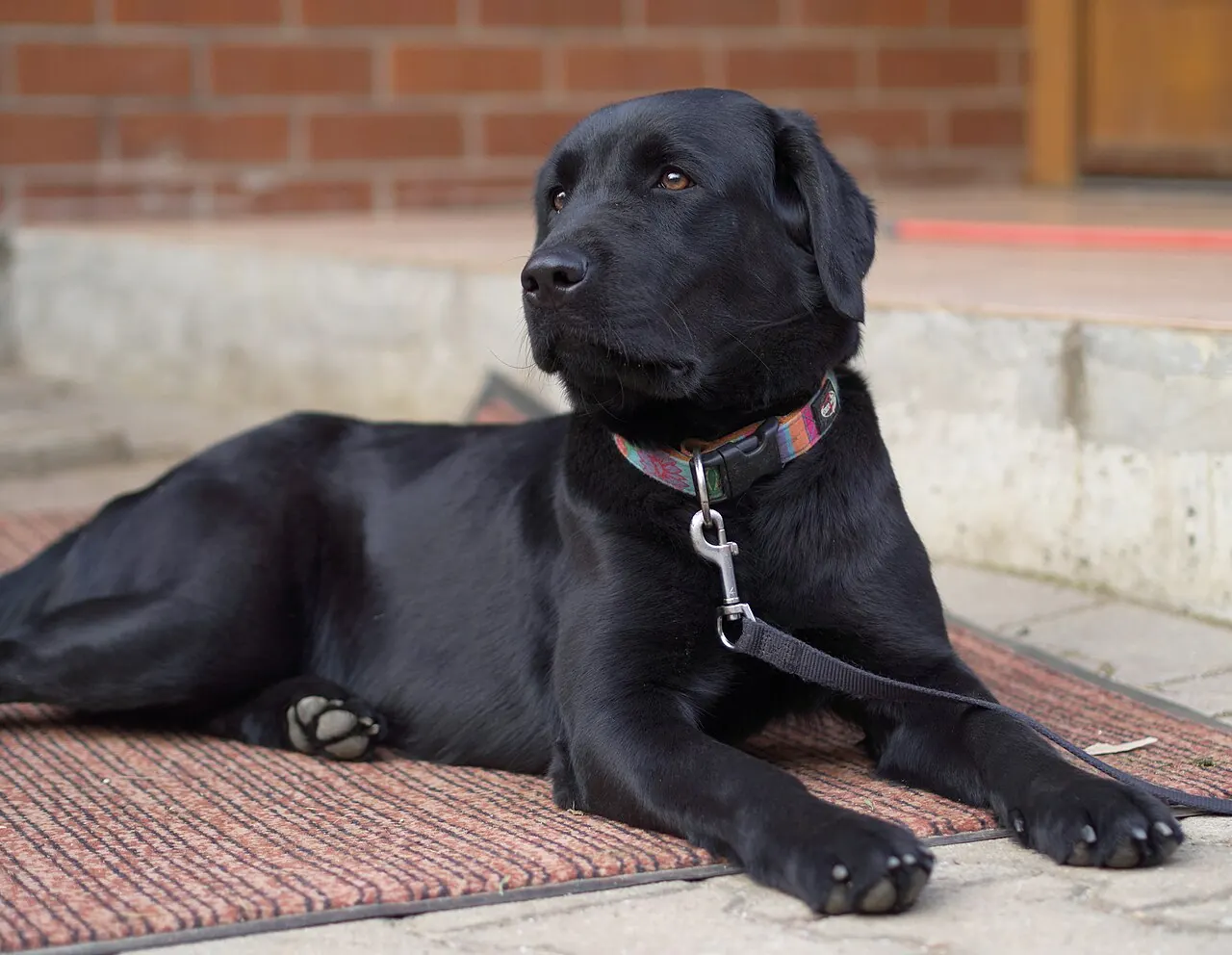
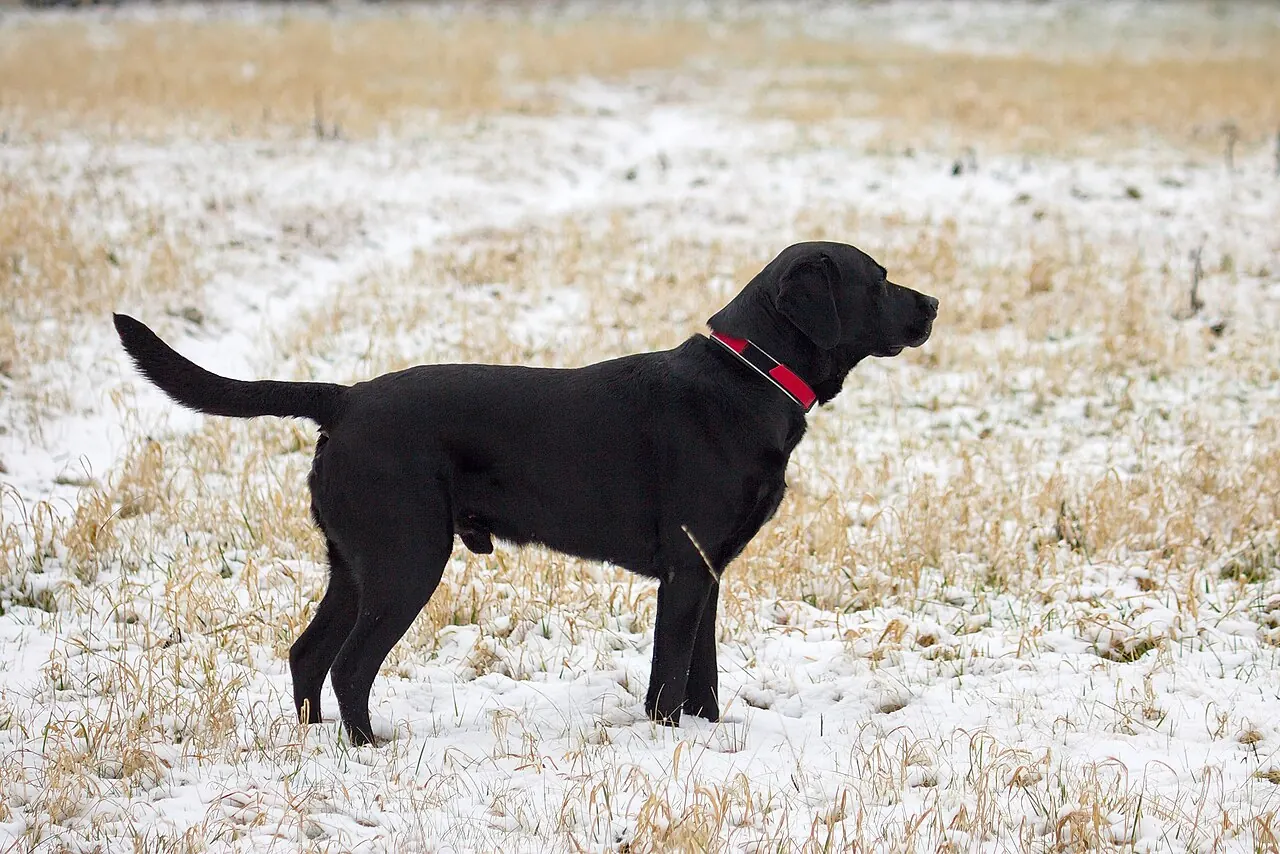
Photos are from Wikimedia Commons, used under the free licences shown. They have been resized, and cropped where they appear in link previews.
A Labrador needs a good hour or more of exercise a day, and loves to swim and fetch. Measure its food: they put on weight very easily. The coat needs a brush once a week and sheds a great deal.
They are friendly with almost everyone, which makes them poor guard dogs and wonderful family dogs. Young ones are boisterous and chew for the first two or three years.
Keep going
Other kinds of pet live on their own pages: choose another.


