It never grows up
Most salamanders lose their gills and move on to land. The axolotl stays in the water with its gills for life.
Snakes, shells and frogs · A lot of time and space
Salamander · from two lakes near Mexico City
A pale pink salamander with a wide, smiling face, tiny dark eyes and three feathery gills on each side of its head.
Paddles after you, gills waving. Move your pointer and see.
Good to know
Most salamanders lose their gills and move on to land. The axolotl stays in the water with its gills for life.
It can regrow a lost leg, its tail, and even parts of its heart and brain. Scientists study it closely.
It is critically endangered in its home lakes, though there are a great many in tanks.
Its name comes from the Aztec language and is often translated as water dog.
It breathes through its gills, through its skin, and can gulp air at the surface.
It needs cold water, between 16 and 18 degrees. A warm room can make it ill.
The real thing
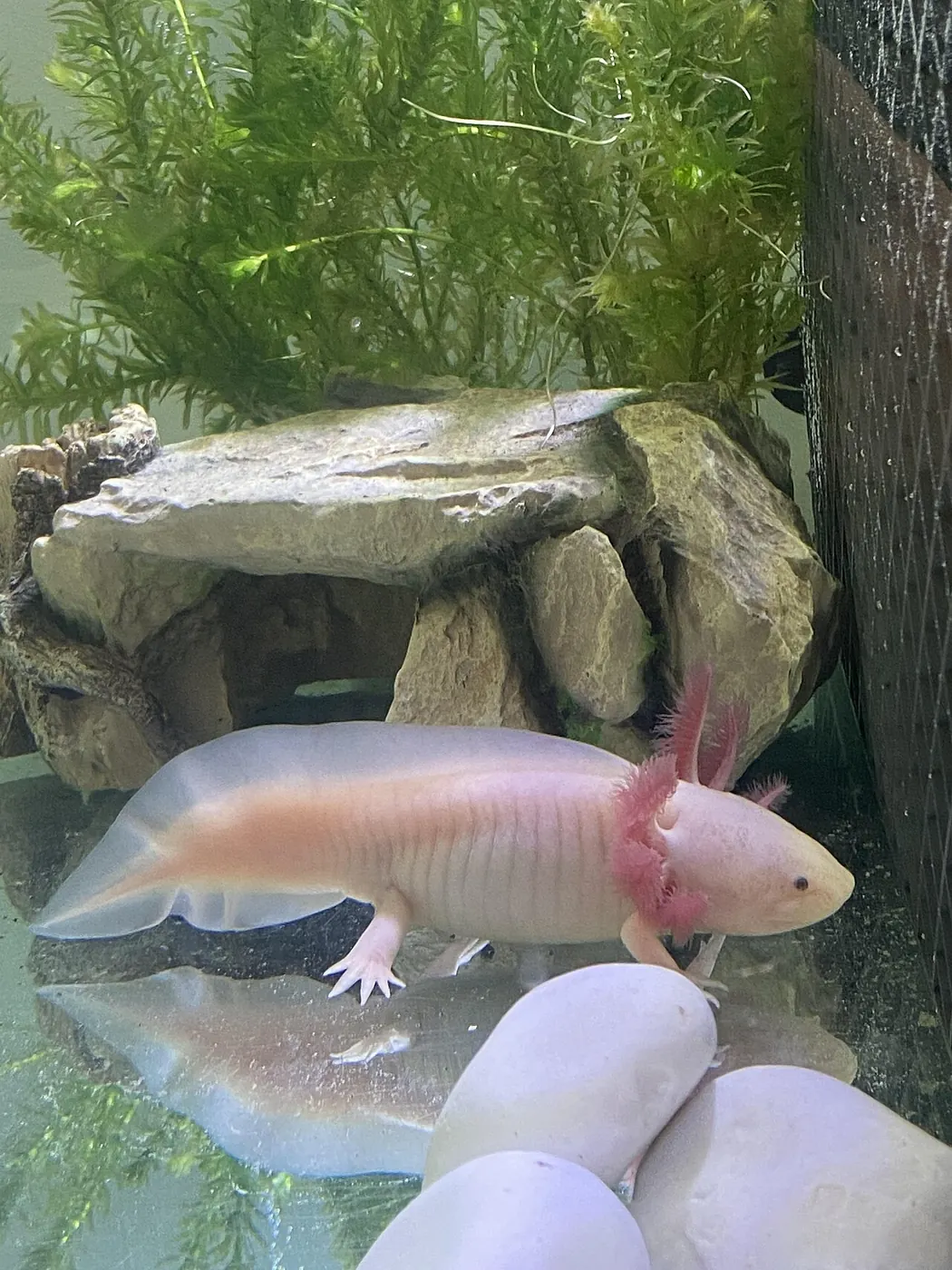
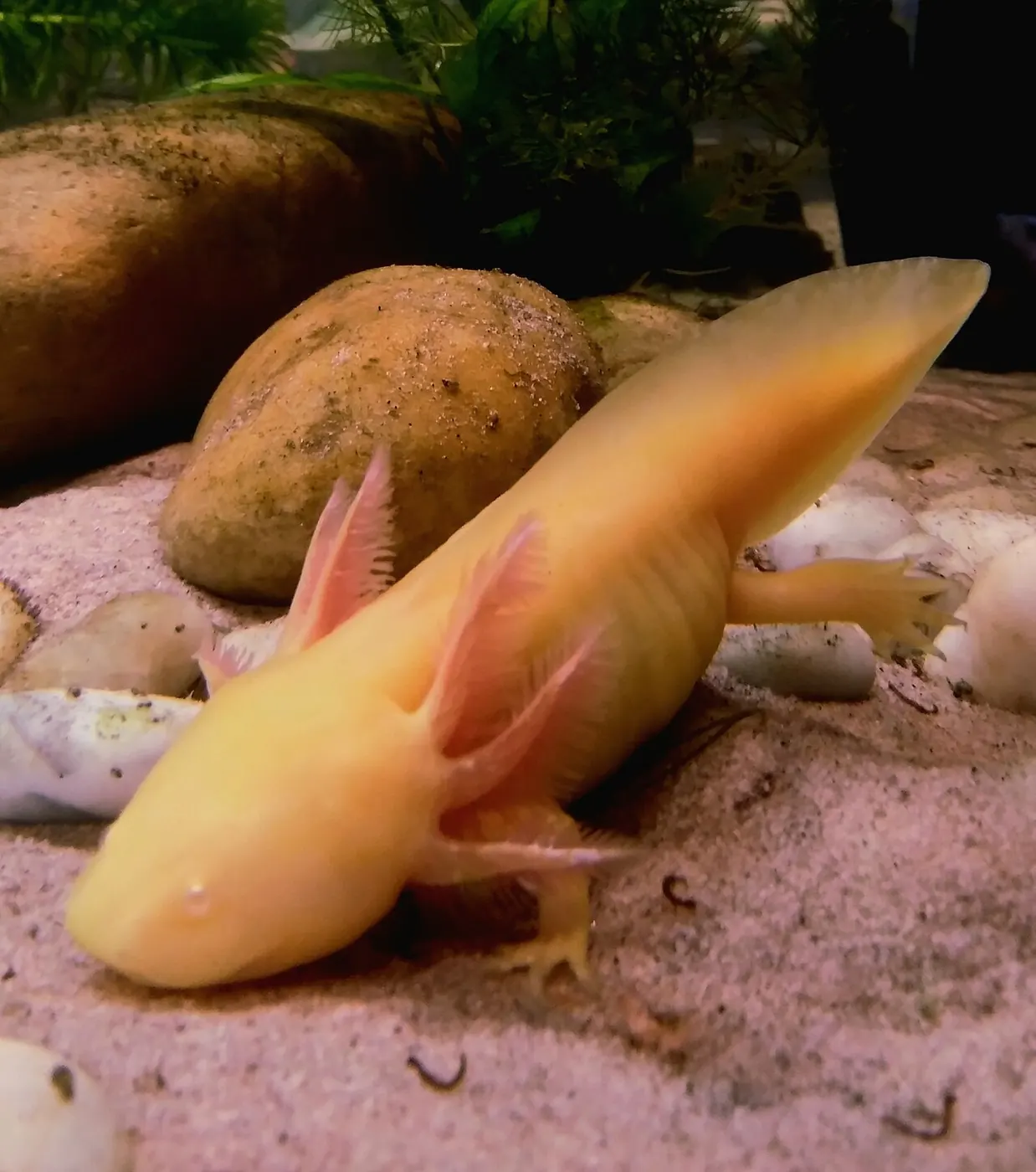
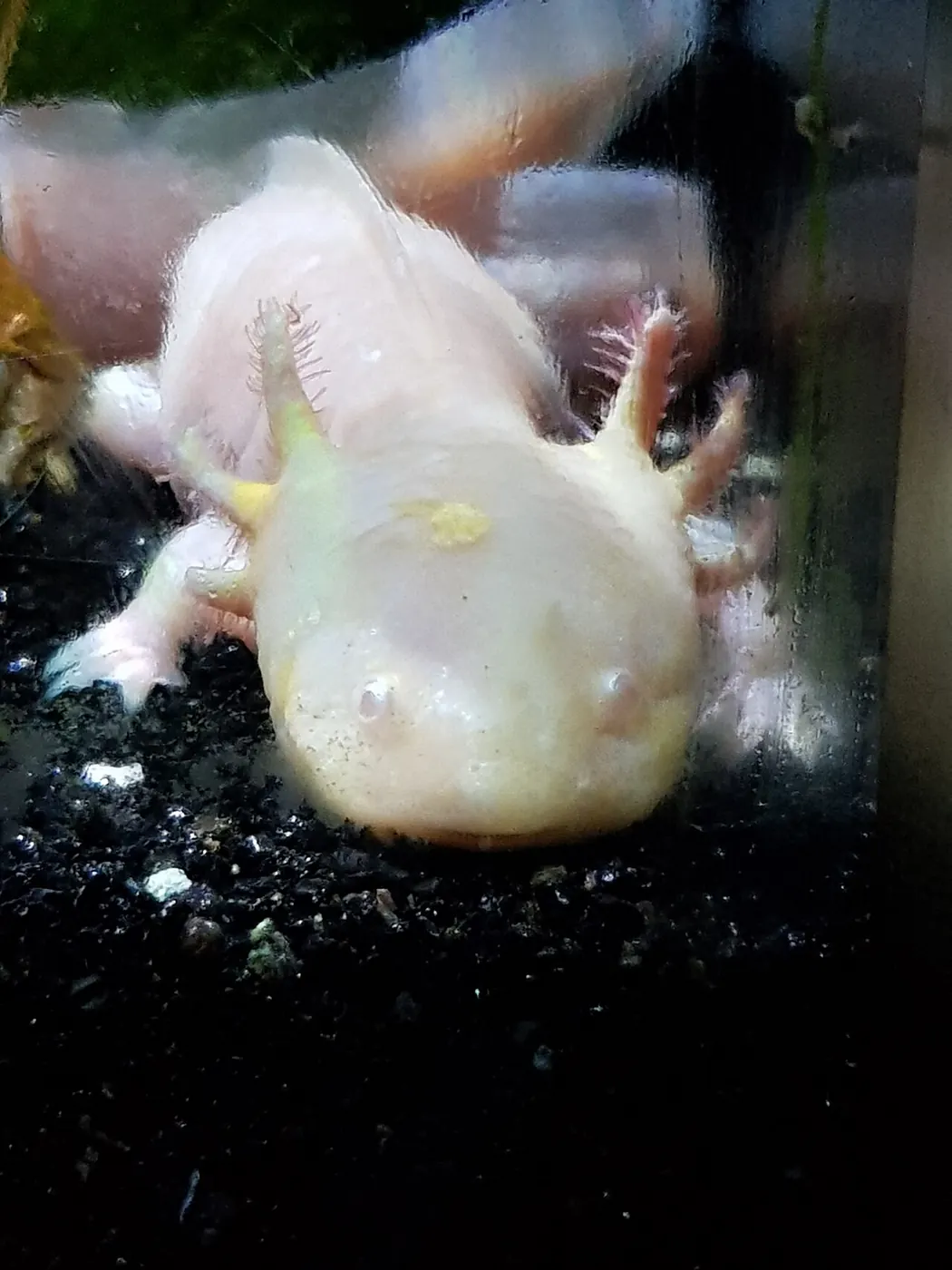
Photos are from Wikimedia Commons, used under the free licences shown. They have been resized, and cropped where they appear in link previews.
It needs a long tank of cool, very clean water with a gentle filter, fine sand and hiding places. It eats worms and special pellets. Look, do not touch.
Axolotls became hugely popular through video games. They are fascinating but fragile, and cool water can be hard to provide in summer.
Keep going
Other kinds of pet live on their own pages: choose another.


