A beard that turns black
When it is alarmed or showing off, it puffs out the spiny skin of its throat, which can turn jet black.
Lizards · Time every day
Lizard · from the deserts of Australia
A stocky, sandy-coloured lizard with a broad triangular head, rows of soft spikes along its sides and a spiny throat.
Scuttles after you, then stops to look. Move your pointer and see.
Good to know
When it is alarmed or showing off, it puffs out the spiny skin of its throat, which can turn jet black.
It lifts a front leg and circles it slowly in the air. It seems to mean: I see you, and I am no threat.
Males bob their heads up and down quickly to show who is in charge.
A tiny light-sensing spot on top of its head detects shadows, such as a bird passing overhead.
It spreads its ribs to make itself as flat and wide as a pancake, to soak up more heat.
Most are calm, rarely bite and will sit on a shoulder. It is the most popular pet lizard in Britain.
The real thing
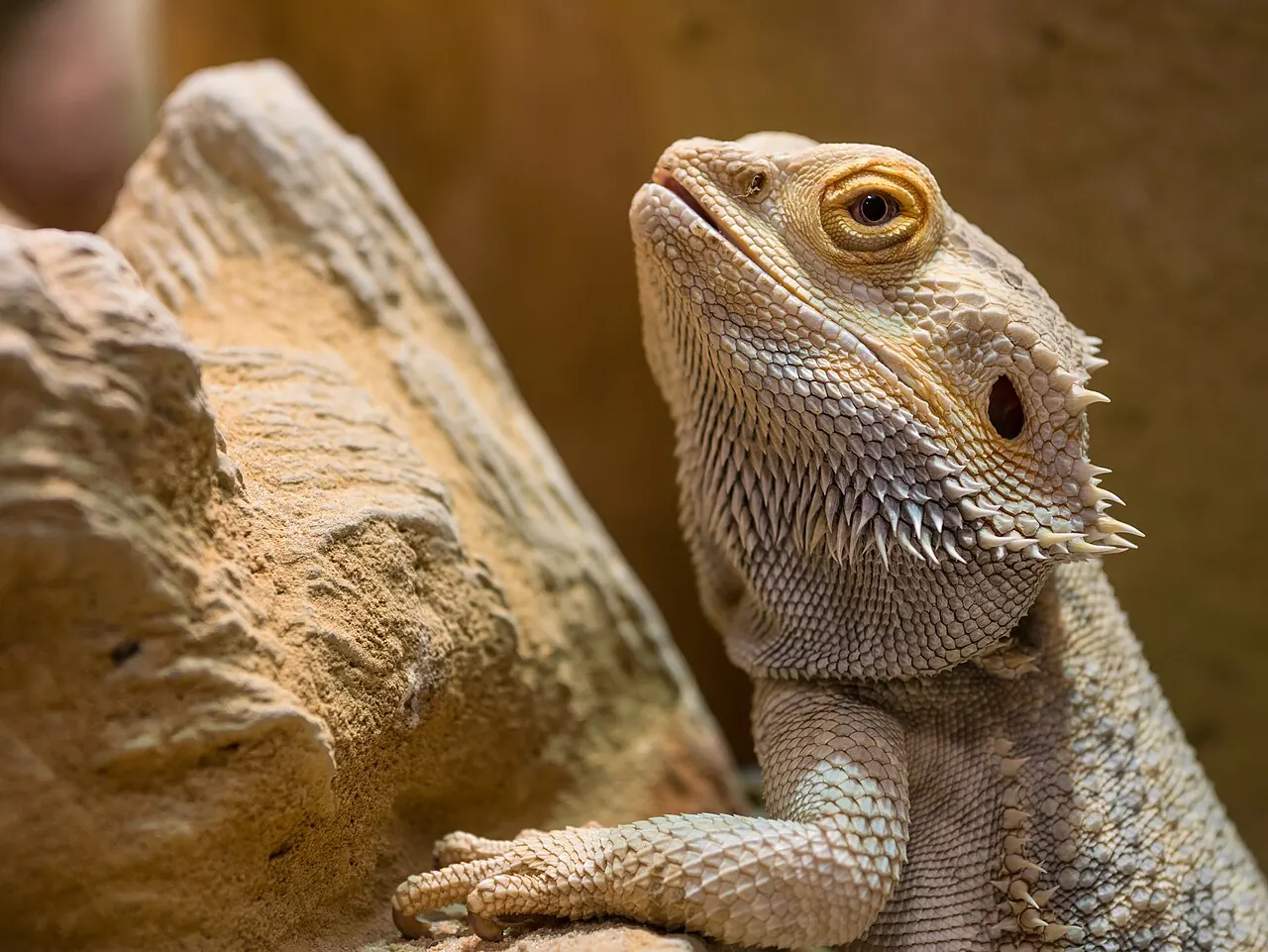
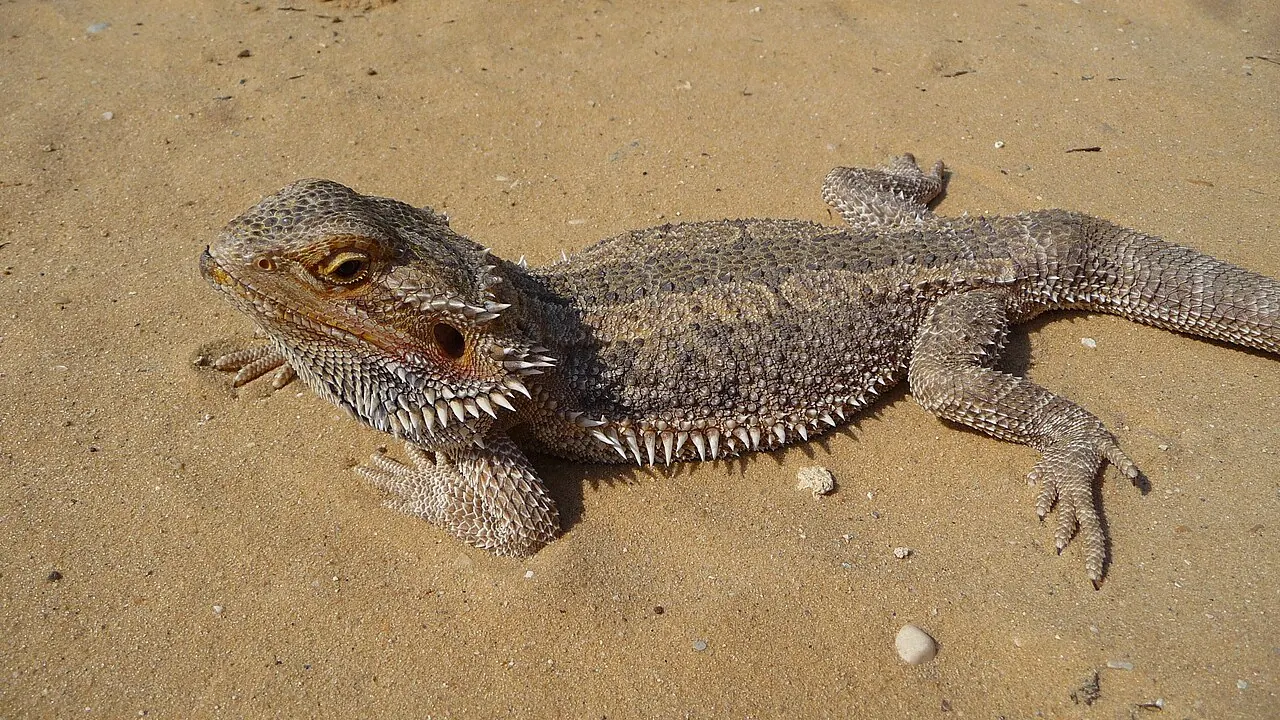
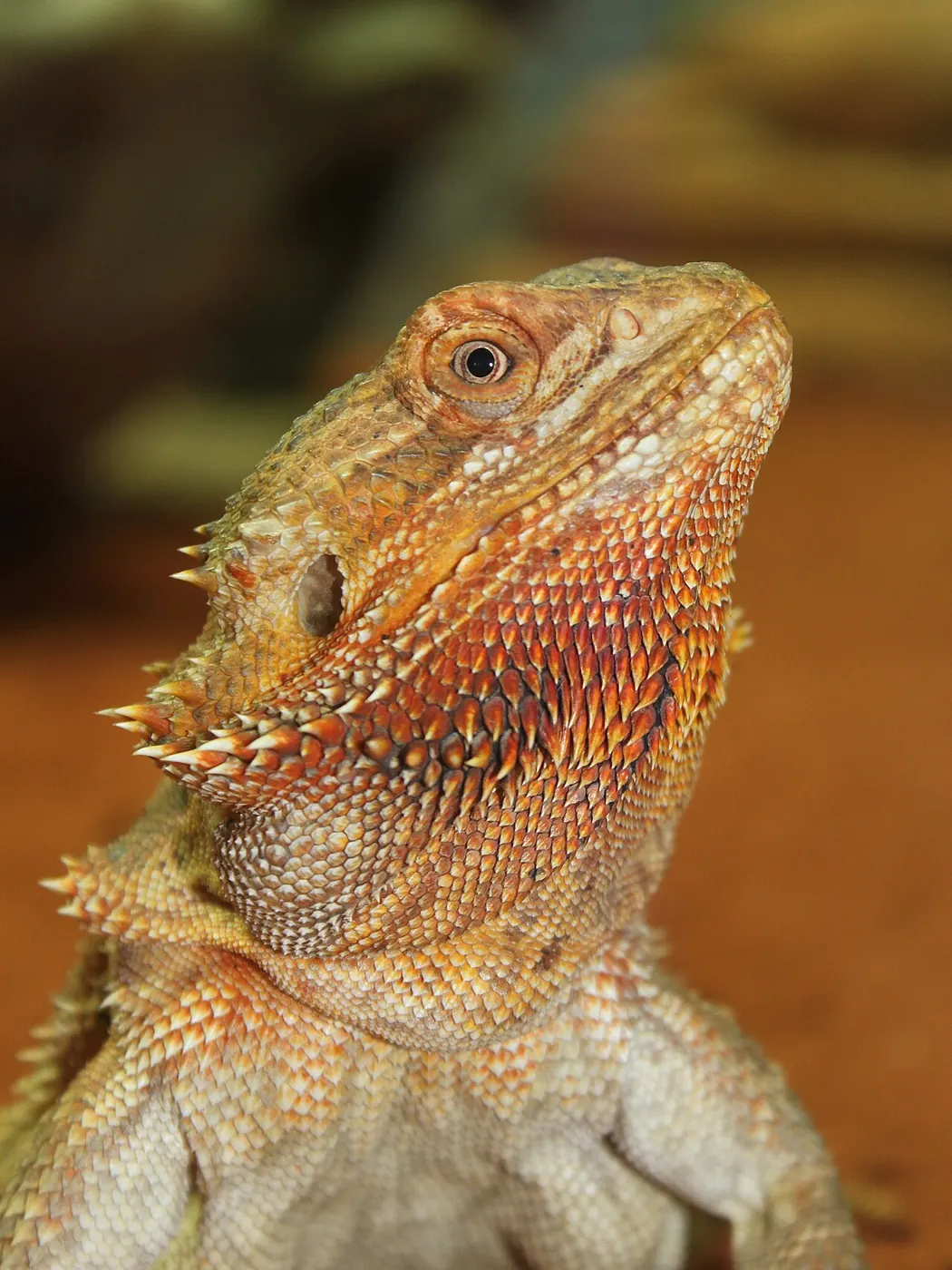
Photos are from Wikimedia Commons, used under the free licences shown. They have been resized, and cropped where they appear in link previews.
It needs a tank at least 120cm long, with a basking spot of about 40 degrees, a cool end and a strong ultraviolet lamp. Feed live insects dusted with calcium, and fresh greens every day.
A bearded dragon is the best lizard to start with, but the tank, lamps and live food cost more than the animal. Lamps need replacing every six to twelve months.
Keep going
Other kinds of pet live on their own pages: choose another.


